
Have you ever opened a service page that looked convincing, only to find the WhatsApp button said nothing more than “Contact Us”? After the click, the customer has to start the conversation from scratch. The admin ends up asking again about the service they want, their location, and their basic needs.
A good landing page does more than send traffic to a WhatsApp number. Its job is to help visitors understand the offer and make the first conversation more relevant. This is especially useful for service businesses, custom products, or B2B sales that require a consultation before the transaction.
1. Write a headline that answers a visitor's need
A headline like “Innovative Solutions for the Future” sounds impressive but doesn't explain what you sell. Compare it with “Product Photography for Food Brands, from Menu Shots to Online Catalogs.” The second version explains the service and who it's for.
Use a simple formula: service + target customer + the outcome you help with. Don't promise revenue increases or guaranteed results without verifiable proof.
2. Explain who it's for—and who it isn't
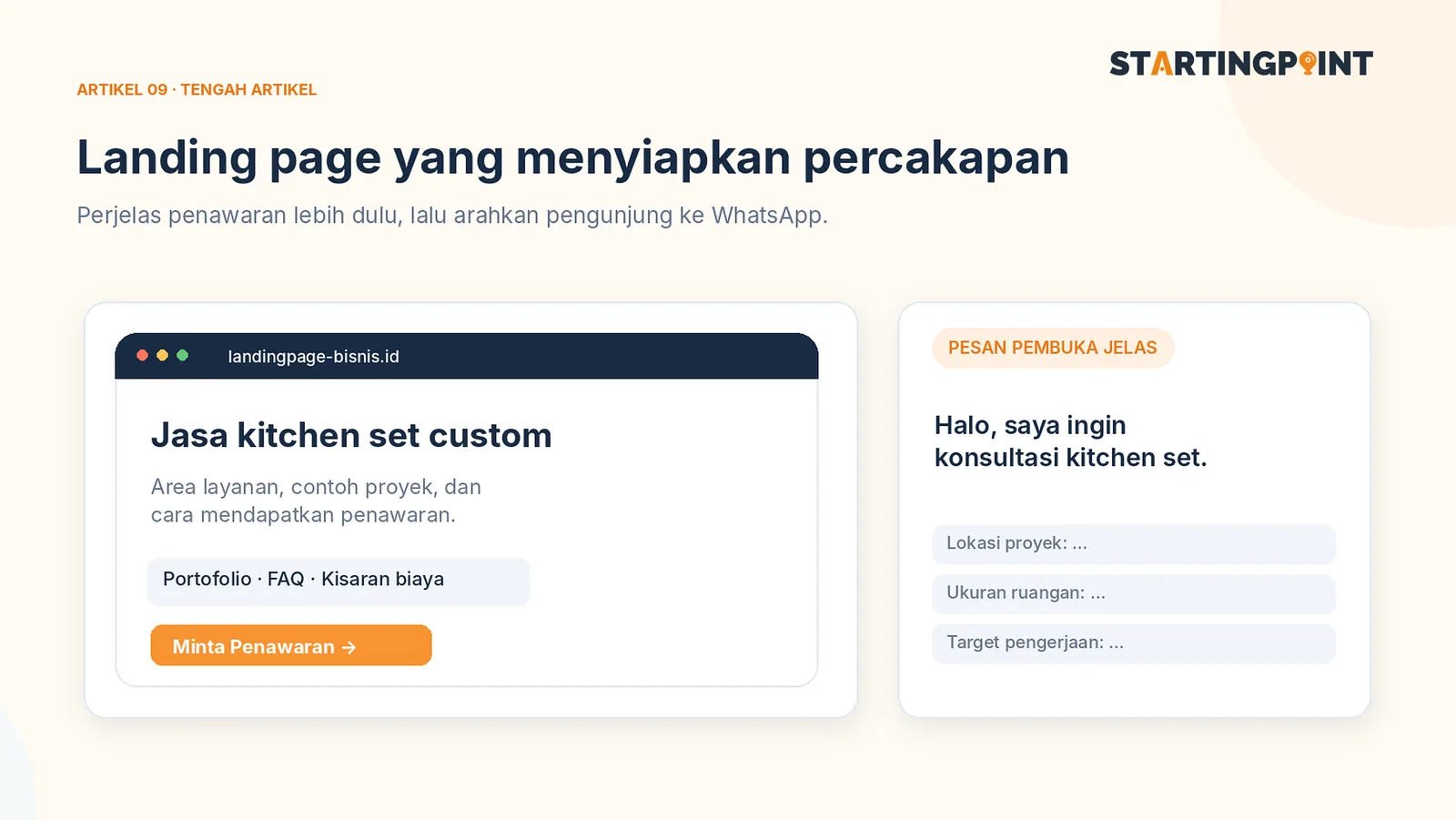
Prospects need a quick filter. An interior design service, for example, can show the types of projects it handles, its service area, and an estimate of the consultation process. With that information, the people who reach out tend to already understand the basic scope.
You don't have to publish a final price list if every project is different. But a range, a starting price, or the factors that affect a quote can help set expectations—as long as the information is accurate and current.
3. Show relevant proof
A portfolio, real photos of finished work, an overview of your process, and testimonials with permission are far more helpful than a pile of icons and animations. For service work, describe the client's initial problem and the solution you delivered without disclosing confidential information.
If you don't have a portfolio yet, show sample processes or sample work clearly labeled as examples. Avoid passing off someone else's project results as your own.
4. Place the CTA at the right moment
The CTA needs to be easy to find on mobile. Place the button after you've explained the main benefits, and repeat it after the proof and FAQ if the page is long. But don't let buttons block content or move around in a distracting way.
Specific labels are usually more informative: “Check Schedule Availability,” “Request an Interior Quote,” or “Discuss a Website Package.” The button must match an action your team can actually handle.
5. Write a useful pre-filled WhatsApp message
Instead of opening an empty chat, the link can carry an opening message such as:
> Hi, I'm interested in the product photography package. I have around ... products and need them done by .... Could you share the details?
Don't put sensitive personal data in the link. The opening message just needs to help the admin understand the context—it doesn't replace the conversation.
6. Answer doubts before customers ask
Include an FAQ based on real questions: how long the work takes, what to prepare, what's included, how revisions work, and when payment is due. If the answer depends on the project, explain the determining factors instead of making overly broad promises.
7. Measure lead quality, not just clicks
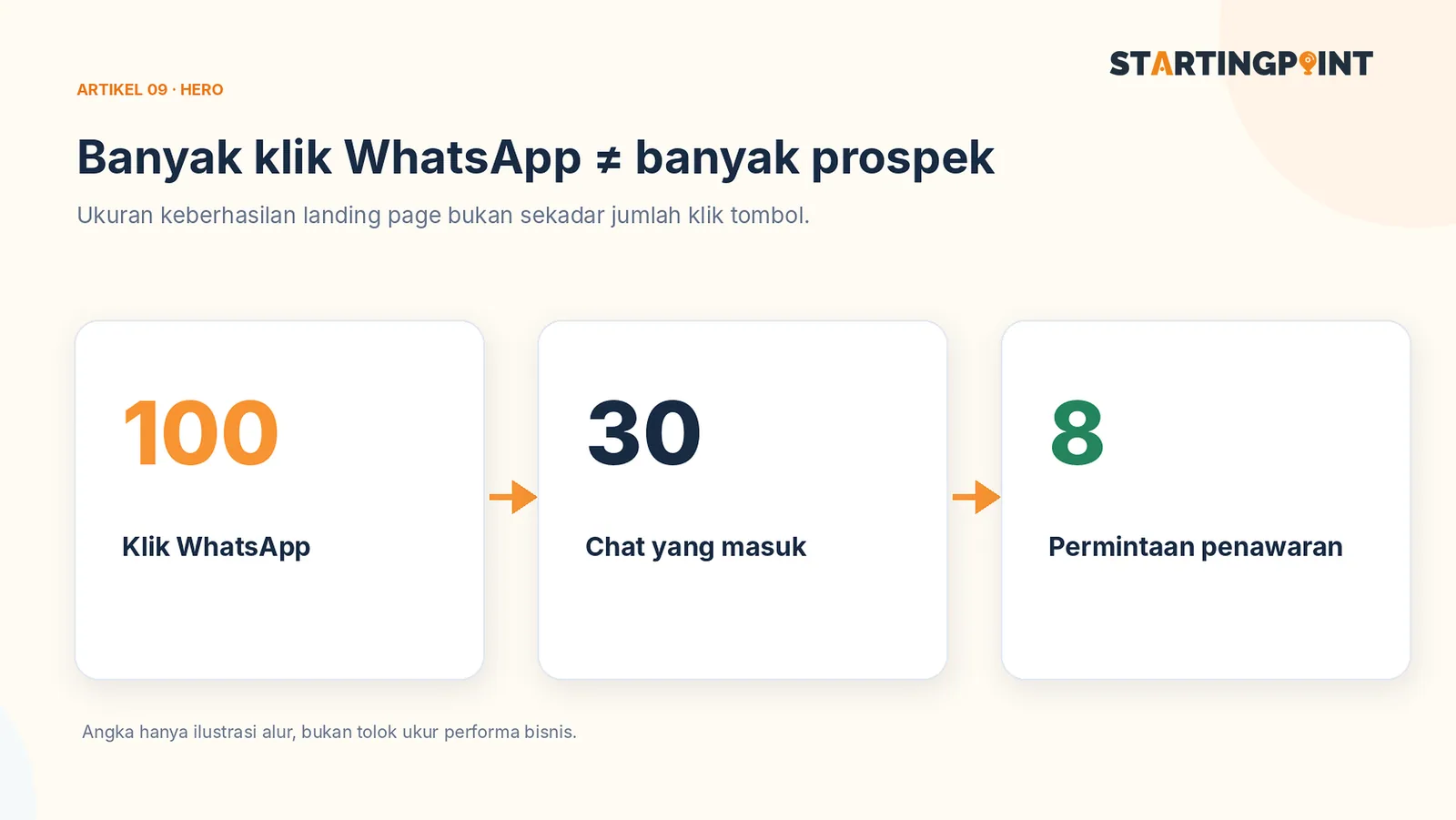
WhatsApp button clicks are easy to count but don't necessarily turn into customers. Keep a simple record: landing page visitors, WhatsApp clicks, incoming conversations, conversations that match your target, quotes sent, and completed transactions.
An illustrative example: 100 WhatsApp clicks produce 20 conversations, which lead to 5 quote requests. That doesn't mean your conversion is bad or good without context. Use the pattern over time to find problems: is the message unclear, is the admin slow to respond, or is the price out of line with expectations?
If you use analytics tools, make sure the implementation and privacy policy fit your needs and applicable regulations.
A page structure you can use
Start with the headline and CTA; follow with an explanation of the service and who it's for; show proof; explain your process and any price information you can publish; close with an FAQ and another CTA. This order isn't a mandatory formula—test it against the patterns in your customers' questions.
Also read the difference between a landing page and a company profile and how to prepare a website brief.
Conclusion
A landing page with WhatsApp is most useful when prospects already have context before they contact you. Start with the information that helps them decide, not visual effects. If you need a landing page that follows your sales flow, tell us about your needs through Startingpoint.