
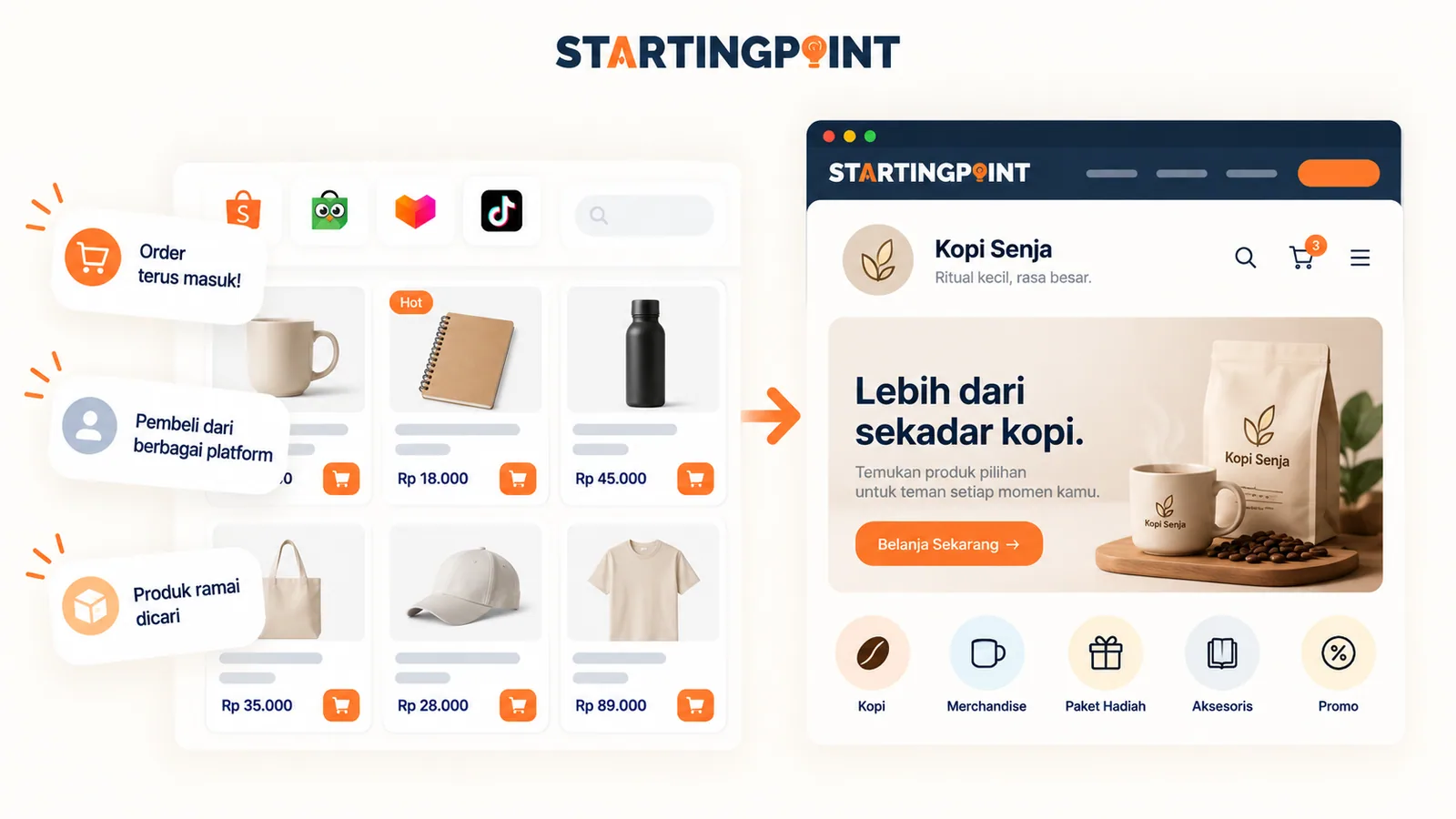
When someone hears your business name for the first time, what do they usually do? Some open Instagram, some search the brand name on Google, and others ask for a catalog over WhatsApp. The problem is that business information is often scattered across many places: prices in a chat, the address in a bio, testimonials in highlights, and service details in a PDF.
A business website is a central place that explains your business and helps visitors take action—for example, requesting a quote, browsing a catalog, making a reservation, or buying a product. A website does not automatically increase sales. Its value shows up when the information customers are looking for becomes easier to find and the process of contacting the business gets shorter.
How is a business website different from a social media account?
Instagram or TikTok accounts are excellent for reaching audiences, building relationships, and distributing content. A website is better suited as a reference point whose structure you control: service pages, purchase terms, portfolio, contact information, and links to the next action.
Imagine a potential buyer finds your product video. They are interested, but they want to compare sizes, variations, and shipping methods. If all that information exists only in old posts, they have to scroll or send messages again and again. A website catalog can put that information at a single address that is easy to share.
This means a website is not a replacement for social media. The two work at different stages: social media attracts attention; a website helps people evaluate and decide.
Four website functions that matter most to small businesses
1. Explain the business without answering the same questions over and over
Basic information such as products, services, service areas, operating hours, and how to order can be available all day. Your team can still handle specific questions, but it doesn't have to retype every explanation from scratch.
2. Serve as an official reference that builds trust
A consistent domain name, brand identity, business details, portfolio, and clear policies help potential customers check whether your business is relevant to their needs. A website is not a guarantee that a business is trustworthy; trust still depends on accurate information and a good customer experience.
3. Support Google search
Website pages that search engines can access have a chance to appear for specific needs, such as “minimalist home interior services” or “office meeting catering.” That chance requires helpful content, the right page structure, and time for Google to find and evaluate it. Results are not instant and not guaranteed.
4. Make the sales process more focused
A website can guide visitors to WhatsApp, a quote request form, a catalog, or checkout. Choose one primary action that fits your business model; don't force every visitor to create an account if all they really need is to ask about pricing.
Website examples for three types of business
Service business. An interior design studio needs service pages, a project portfolio, the work process, service areas, and a consultation button. Checkout doesn't have to be a priority.
Physical product store. A home goods seller needs product categories, clear photos, size information, stock or availability, shipping costs, and a way to order. If orders are already high in volume, a cart and online payment can help more.
Event organizer. A community or class organizer may need event information, schedules, pricing, an FAQ, and registration. The website should follow the participant's journey, not copy the structure of a physical goods store.
When does a business need a website?
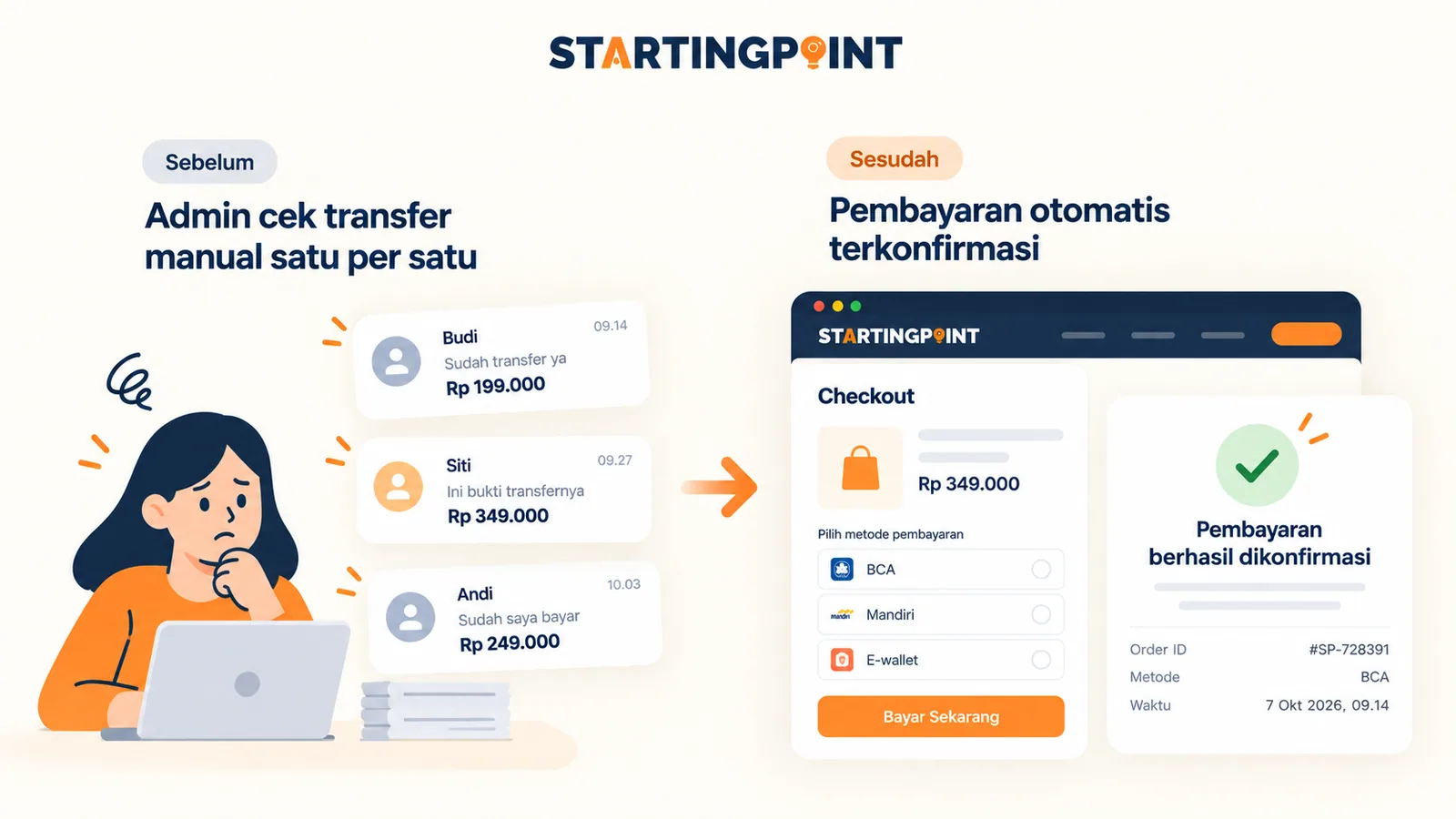
Use these three questions. First, do customers repeatedly ask for the same information? Second, are you losing potential customers because service details are hard to find? Third, do you want to start building search traffic for topics that are genuinely related to your products? If one or more answers is yes, even a simple website is worth considering.
But don't rush into building a full online store when your catalog still changes every day and orders still need personal discussion. Starting with an informational website or a catalog with a WhatsApp button can make more sense.
Three things to prepare before commissioning a website
- Primary goal: do you want visitors to contact your team, sign up, or buy?
- Core content: service descriptions, product list, original photos, contact details, and an FAQ.
- Success metrics: the number of qualified conversations, quote requests, sign-ups, or transactions—not just visitor counts.
If you're still unsure which format to choose, read the differences between a landing page, company profile, and online store. To clarify your requirements for a developer, use the business website brief checklist.
Conclusion
A business website is more than a digital brochure. The right website helps customers get answers and complete the next step. Its type should follow operational needs, not design trends.
Want to build a website that fits your business needs instead of just installing a template? Explore custom website and online store services at Startingpoint, then discuss your goals and project scope.