
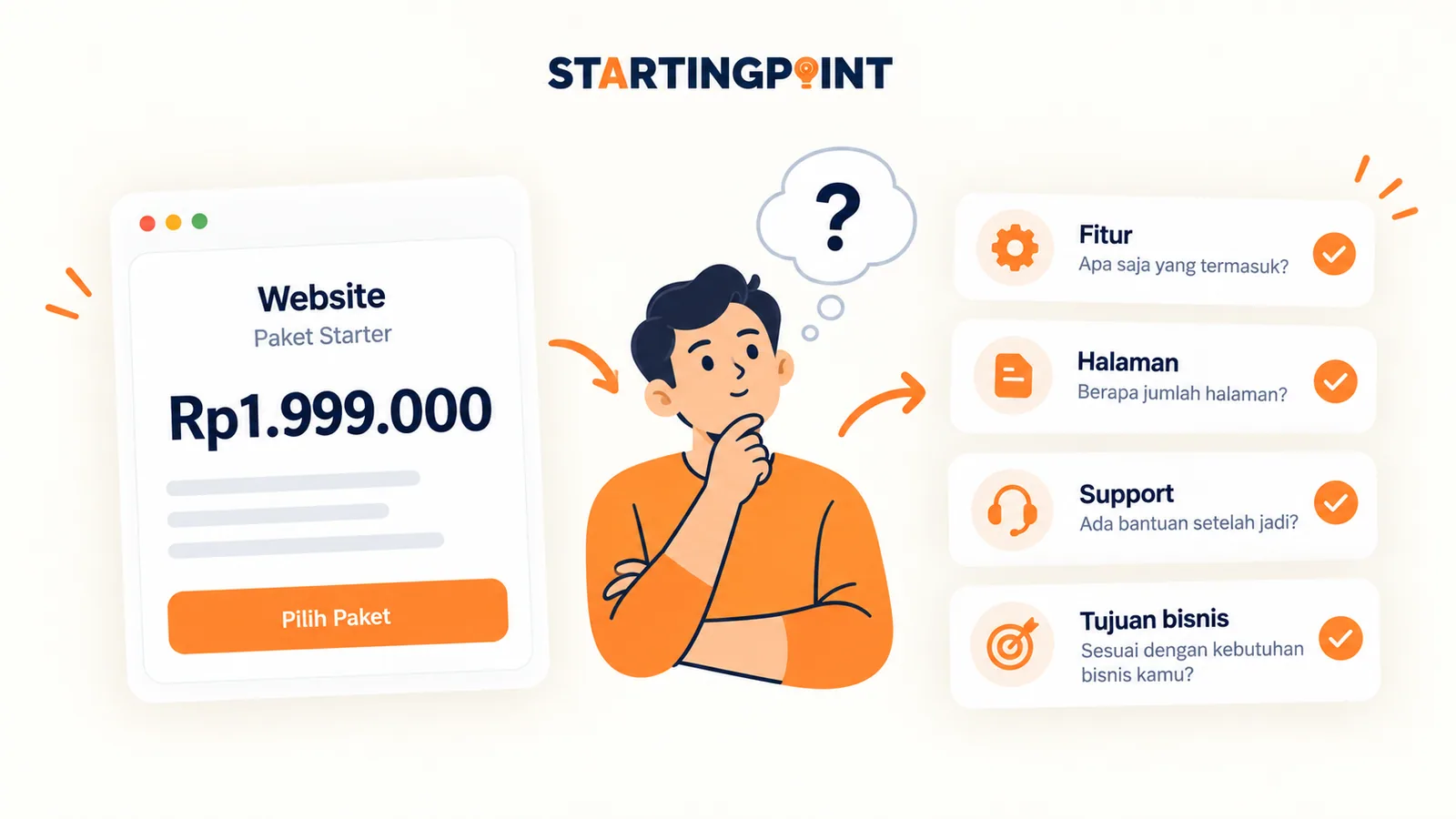
Two website proposals can look very different. The first asks for a development fee up front. The second offers monthly payments. Business owners often compare the first invoice amount right away, when a better decision comes from looking at total cost, access rights, and the work actually delivered.
“One-time payment” usually refers to the cost of building the website. That does not automatically remove domain, infrastructure, technical support, or third-party integration costs. On the other hand, “subscription” is not always bad: for certain needs, recurring fees can actually make updates and operations easier.
How does the one-time payment model work?
In a project model, scope is agreed first: which pages are built, what functionality is included, when previews are provided, and how revisions are handled. The client pays for development as agreed. After the website launches, maintenance or added features may carry their own costs.
This model appeals to businesses that want a website tailored to their workflow and do not want development costs packaged as a platform rental. But the quality of the agreement matters a great deal: ask about access, usage rights, migration procedures, and who is responsible if the website has problems.
How does the subscription model work?
The subscription model charges a recurring fee for access to a platform or service plan. The benefits can include ready-made features, product updates, and relatively standardized support. The challenge is that you need to calculate costs as your needs grow: additional team members, capacity, plugins, integrations, or transactions.
Make sure you also understand what can be exported if you stop later. On some platforms, content may be easy to move, but the design or functionality cannot always be carried over exactly as it was.
Don't compare only the starting price
Suppose this is an illustrative simulation, not a Startingpoint quote:
- Option A: build cost Rp3,000,000, service fee Rp0 per month, domain Rp250,000 per year.
- Option B: setup fee Rp0, subscription Rp150,000 per month, domain Rp250,000 per year.
If terms and prices are assumed unchanged for three years, Option A totals Rp3,750,000, while Option B totals Rp6,150,000. But the comparison changes if Option A requires additional hosting or maintenance costs, or if Option B already includes features and support that would have to be bought separately with Option A.
That is why the final number cannot be separated from the scope of service.
Six key questions before you choose
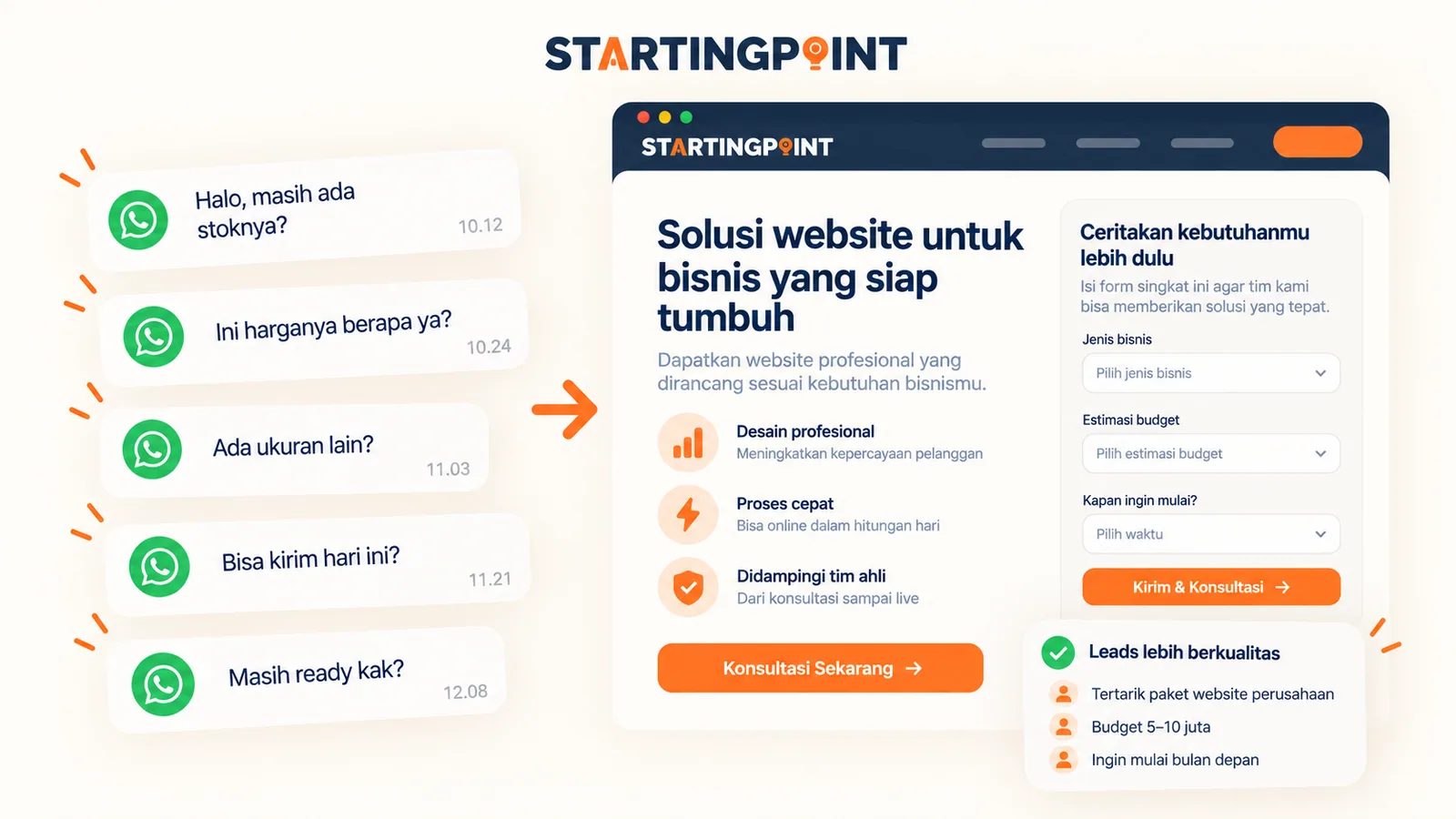
What are you actually buying? Development services, a platform license, infrastructure, or all of it at once?
What happens if you don't renew? Does the website keep running, lose certain features, or become inaccessible?
Who manages the domain? Make sure the access and renewal process is clear.
What does maintenance include? Automatic backups, monitoring, security updates, bug fixes, and content changes are all different kinds of work.
What if your needs grow? Calculate the cost of pages, features, integrations, capacity, and migration.
What can be moved? Ask for clarity on data export, domain, design, and code usage rights under the contract.
When is each model a better fit?
A one-time payment website can fit when your business workflow is fairly specific, you want development costs to be clear from the start, and you can plan long-term support separately. A subscription can fit when the priority is getting online quickly with standard features and the team wants the provider to handle many operational needs.
No model is automatically cheaper for every business. Calculate over a two- to three-year horizon, not just one month.
At Startingpoint, the phrase “one-time payment” refers to development costs according to the package. The site also lists the domain separately and recurring service fees on some packages. Check the latest details and terms before concluding the total cost. For a more thorough budget simulation, see the small business website cost guide.
Conclusion
The best choice is not simply the one with the lowest bill, but the one that offers the right feature fit, a total cost you can understand, and clear rights and responsibilities. Ask for a written quote that separates build costs, recurring services, and third-party costs.